
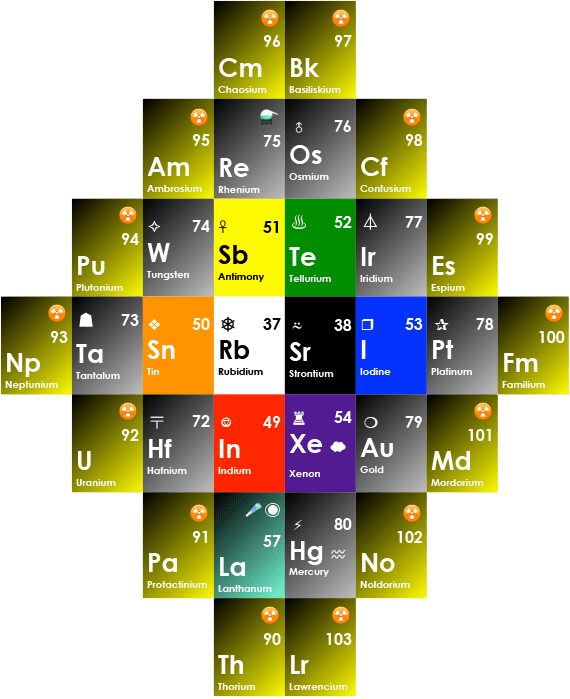
Protactinium [91]: a dense, silvery grey, toxic, orphic metal. Protactinium is more dense and rigid than thorium but is lighter than uranium, and its melting point is lower than that of thorium and higher than that of uranium.
Uranium [92]: a very heavy, silvery white orphic metal. Uranium is used in kinetic energy penetrators and armor plating, and as a colourant in glass, producing orange-red to lemon yellow hues.
Neptunium [93]: a hard, silvery orphic metal. Neptunium is similar to uranium in terms of physical workability.
Plutonium [94]: a hard, brittle, silvery orphic metal. Used mainly in energy production, as a power and heat source, or for explosives.
Ambrosium [95]: a soft, silvery white orphic metal. Used mainly as a preservative in a variety of applications, especially resistance to natural decay.
Chaosium [96]: a purple-glowing, hard, dense, silvery orphic metal. Used mainly in chaos-related applications.
Basiliskium [97]: a soft, silvery white orphic metal. A litho-kinetic material, basiliskium is mainly used to petrify other materials, turning them to stone.
Confusium [98]: a soft, malleable, silvery-white orphic metal. Used mainly as mind-scrambling agent.
Espium [99]: a soft, glowing, silvery white orphic metal. In addition to its glow, espium radiates heat, but damages its own structural integrity while doing so. A psychokinetic material, espium is used to confer psychic abilities.
Familium [100]: a very heavy, silvery-white orphic metal. Used as a catalyst in a variety of applications, especially detection of relations and familiars.
Mendelevium [101]: a very heavy, silvery-white orphic metal. Used mainly as a catalyst in a variety of applications, especially detection instruments.
Nobelium [102]: a very heavy, silvery-white orphic metal. Used mainly as a catalyst in a variety of applications, especially detection instruments. Nobelium behaves as a heavier homolog to yogiberrium.
Lawrencium [103]: a very heavy, silvery-white orphic metal. Used mainly as a catalyst in a variety of applications, especially detection instruments.
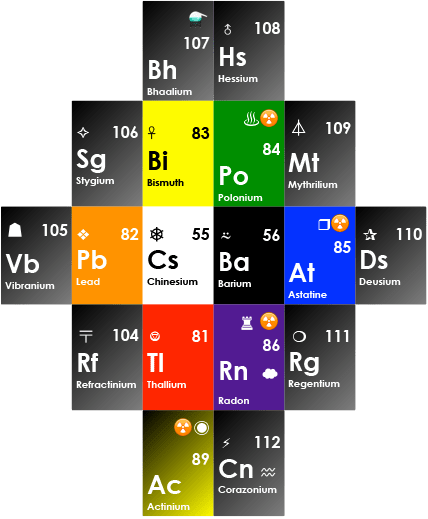
Refractinium [104]: a very heavy, silvery-grey eccentric odic metal. Extraordinarily resistant to heat and wear, refractinium is used in alloys with iron, titanium, niobium, tantalum, and other metals.
Vibranium [105]: a hard, blue-grey eccentric haptic metal. Absorbs kinetic energy to become temporarily even more hard and dense. Vibranium is renowned for its resistance to corrosion by acids. Called Cuendillar or “Heartstone” by some.
Stygium [106]: a hard, heavy, blue-black eccentric chromic metal. Crystalline in nature, with refractive qualities that are used in cloaking or invisibility applications. High-density alloys of stygium are used in high-quality darts, arrowheads, etc..
Bhaalium [107]: a heavy, silvery-white, highly corrosion-resistant eccentric esoteric metal. Used in exotic alloys. A highly toxic element, wounds inflicted by bhaalium weapons are notoriously difficult to heal. Used to create “Baatorian Green Steel,” also known as “Rearden Metal”.
Hessium [108]: a hard, shiny, bluish silver eccentric stoic metal. Its alloys with platinum, iridium, and other platinum group metals are employed where extreme durability and hardness are needed. The densest element, and subtly luminescent, hessium can be alloyed and forged into delicately wrought “Hessian” blades of exceptional lasting sharpness. Used in “Valyrian Steel”.
Mythrilium [109]: a hard, very dense, silvery white, corrosion resistant eccentric sthenic metal. Famously alloyed and wrought into fine, strong, lightweight armour. Also used to create beskar, or “Mandalorian Iron”.
Deusium [110]: a glowing, moon-white, corrosion-resistant eccentric majestic metal. Also called “God-silver,” this element is worth 500x its weight in gold. Used in restorative or curative magic.
Regentium [111]: a glowing, sunshine-yellow, corrosion-resistant eccentric numismatic metal. Also called “King-gold”, this element is worth 10x its weight in gold. It is rumoured that regentium coins exist, and are traded only among the world elite. Used in medicinal magic.
Corazonium [112]: a glowing, deep red, viscous, eccentric frantic metal. Liquid at room temperature, and incredibly volatile, corazonium is used in pyrotechnics and other serious explosions. Also known as “Urthe-blood” or “Red Mercury”.
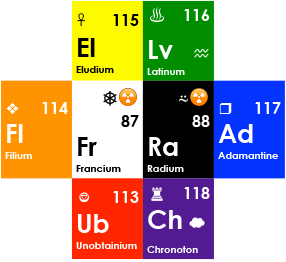
Unobtainium [113]: a soft, blue-black, malleable cryptic metal. Sometimes called “cold steel,” unobtainium is stronger than galvornium, toxic to touch, but stable in sunlight, it makes for some very mean-ass armour and weaponry.
Filium [114]: a soft, pink catholic metal, disturbingly similar to flesh in both appearance and texture. Affectionately called “the philosopher’s child” by alchemists, filium is used in the creation of golem.
Eludium [115]: A whitish, silver-pink mephitic metal. Used in anti-gravitational inter-dimensional and inter-planar travel.
Latinum [116]: a silvery, viscous, vitriolic metal. Liquid at room temperature, latinum cannot be replicated through any known alchemical means. Called in folklore “the elixir of life” or “livermorium,” it is renowned for its healing properties.
Adamantine [117]: a sparkling, translucent salic metal. Exceedingly hard, and almost impossible to smith. The most legendary of all metals, it is indeed “the shit”.
Chronoton [118]: a super-dense, dull, odourless, hermetic gas. Chronoton fills the ethereal plane. The intense density of chronoton warps the temporal dimension.
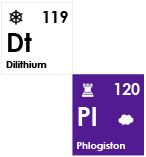
Dilithium [119]: a lavender-pinkish, crystalline dynamic metal. Useful in massive energy production, and in resurrectional magic.
Phlogiston [120]: a superdense, sparkling, silver-white, odourless hermetic gas. Phlogiston (called ‘Phlo’ for short) fills the Astral Plane. Its density warps and weaves all dimensions.
 The Ages of Urthe